
Art as a transformation tool in Satoko Yokohama's Seaside Serendipity
Iveta Rusinova
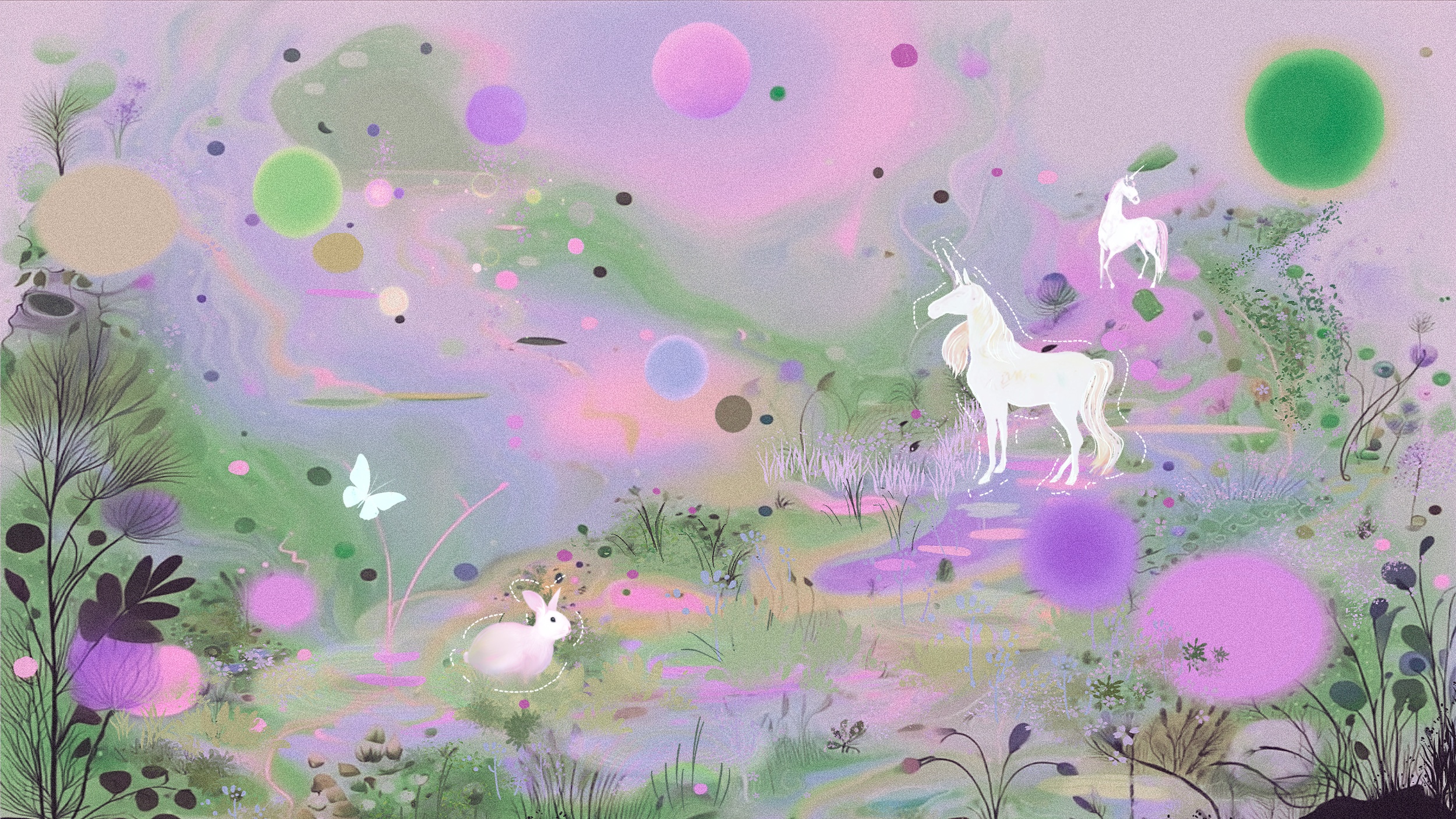
Seaside Serendipity is a whimsical pastel watercoloured fable of intertwined vignettes about the fundamentals of being an artist and the corruption of adulthood over creativity.
This film is best described as an artpiece consisting of several small fragments that at first glance have barely anything in common, but are tethered with the exploration of different art forms and the appearances of a few recurring objects like a sleek black cat.
Based on the manga by Gin Miyoshi, the story takes place in a stunning coastal town whose vibrant scenery is like a magnet for wandering artists. The main thread follows local 14-year-old Sosuke who, like almost every kid, has his finger in every pie. He’s a member of the art club in his school, but also of the newspaper one and does other different art projects often collaborating with the older Teruo Nashimoto and the younger Ryoichi Tachiban. In parallel to these events, a charming seaside villa is given for rent by a jovial rental agent to several bohemian-style artists, from a cunning con artist to a mysterious sculptor. The plot is roughly divided into three incoherent segments each beginning with a new artist renting the villa and setting the course for new vicissitudes with almost purposeful aimlessness.
‘Most parents in this town are bullshit!’
In its essence Seaside Serendipity is a coming-of-age story, telling the tale as old as time of adolescents feeling misunderstood or downgraded by adults. Their efforts or accomplishments might be celebrated occasionally, but their judgment is usually met with skepticism. Here adults are illustrated as even more childish than kids, often getting themselves in ridiculous situations like being scammed to buy useless knives from a con artist. It’s lightly implied that it’s the children’s sensitivity to art that elevates them, yet this quality gradually becomes burdened by reality as they grow older. And yet an adult's maturity doesn’t always equal wisdom. In the second segment the focus is on Sosuke and his classmate who have taken a video of a caretaker singing with elderly people in the scorching sun as a potential remedy for dementia. The two kids have intentions of interviewing the caretaker to find out if her questionable methods are justified when their video is accidentally ‘leaked’ by their professor and they’re met with the words: “you’re not a journalist”. The decline in people’s expressiveness is linked to seemingly harmless comments in their formative years that could leave a stain and be a potential reason for premature confrontation with harsh realities.
The narrow-mindedness of grown-ups is also explored through the sequence with the elder woman. Teruo Nashimoto is consumed by a personal project of creating a realistic face mask to resemble the dead husband of this sick elder woman as a form of consolation as she claims in her dream her late husband promised to come and visit her on her birthday. Teruo’s selfless yet peculiar act of service is met with outrage from the relatives of the woman and even with an accusation of stealing. However, Yokohama is not lecturing the audience on whether the act is morally wrong or right, but is simply demonstrating artistry in one of its many forms as an outlet for grief.
‘I’m not an architect, I’m an artist!’
Every child in the film is an artist in their own way, whether they’re just taking pictures on the beach or crafting an avant-garde piece. Most grown ups are not, except for the wanderers renting the villa, and even then they’re ‘spoilt’ artists like the conman or the debt collector that ends up being Sosuke’s aunt. They represent the corruption of artistry that comes with maturing, one factor being finance. Sosuke’s aunt tries to convince his mum to not encourage him to pursue an artistic job as it’s not reliable. Even the commissioner that asks Sosuke to sculpt a detailed miniature mermaid, although appreciative of his talent, is immediately thinking of remuneration whether it’s through money or books, further proving that art’s function is gradually replaced from a way of expression to a way of income. The purity and nature of creativity is defiled and the result is a grown woman asking in tears a young boy to explain to her the meaning of art.
There is a glimpse of hope by the end as the process of disconnection seems to be reversible. One of the recurring objects throughout the vignettes is a whistle which is given to Sosuke’s aunt as a tool to recognise ‘real’ artists. When she blows it first, an unpleasant sound fills the air. She seems unbothered. After all, she’s a debt collector for runaway artists. She’s not one of them. She knows the whistle works as the first time she hears its gentle melody is when the talented Sosuke blows it. However, by the end, when moved by her nephew and the real estate agent's dedication to conserving the crafts and their ‘preachers’, she blows the whistle again and this time to her surprise a chirpy melody winds.
‘Making art is not about getting a title or recognition. You do it because you want to!’
Seaside Serendipity is a tender postcard about the collective beauty of art that, through its rich low saturated palette, softly exudes an earlier Wes Anderson style. Its leisurely pacing and lack of structure might appear too adrift, but if you surrender and go with its flow, by the end you’ll be reminded that ‘all artists are self-proclaimed’ and even if your name isn’t present in the art books, as long as you keep going to the beach with an empty canvas and an idea, you’re a creator.
Iveta Rusinova
Insta: @ivie_kiwi01
As a Dublin-based emerging film journalist and member of the Young Irish Film Critics, I have spent the past five years developing a strong critical voice across reviews, feature essays, interviews, and podcasts. My work has led me to cover major festivals including Galway Film Fleadh, the Edinburgh Film Festival, and Cannes, as well as contribute to Dublin International Film Festival and independent publications. I hold an MA in Screenwriting and am actively pursuing scriptwriting alongside my journalism, which deepens my sensitivity to narrative craft and storytelling across forms.