
Wandering, Lingering, Searching, Fleeing
Kairan Li
When watching these short films – works by young filmmakers who may have only recently left school – I kept returning to an image: a river of subconscious, running ceaselessly through each body. To step into short filmmaking is to step into that current for the first time. One reaches into the water, uncertain what might surface. There is exhilaration in discovery, frustration in what slips away, instability in confronting unfamiliar force, trembling when they finally grasp something precious – the one treasure that resonates most deeply within. After being washed over countless times, it is lifted from the water and held up before the adults who once doubted these young gold seekers, worried for them, yet quietly pinned hopes on them.
For those on the shore, these glimmers together form a new world – still chaotic, still taking shape, yet containing all that has happened and is yet to happen. In this world, it's possible for everyone to become a child once more.
A short film can be driven by the tremor of a nerve, a reverie-like impulse, a flash of inspiration that appears and vanishes with no reason. It may tell a complete and carefully structured story, or it may simply embody a surge of emotion, a fragment of memory, an image-poem. It can dwell in the everyday without the ambition for grand narratives, or tentatively engage with public questions still taking shape. It may be a question mark, a journey of wandering or searching – but it is never a definitive answer.
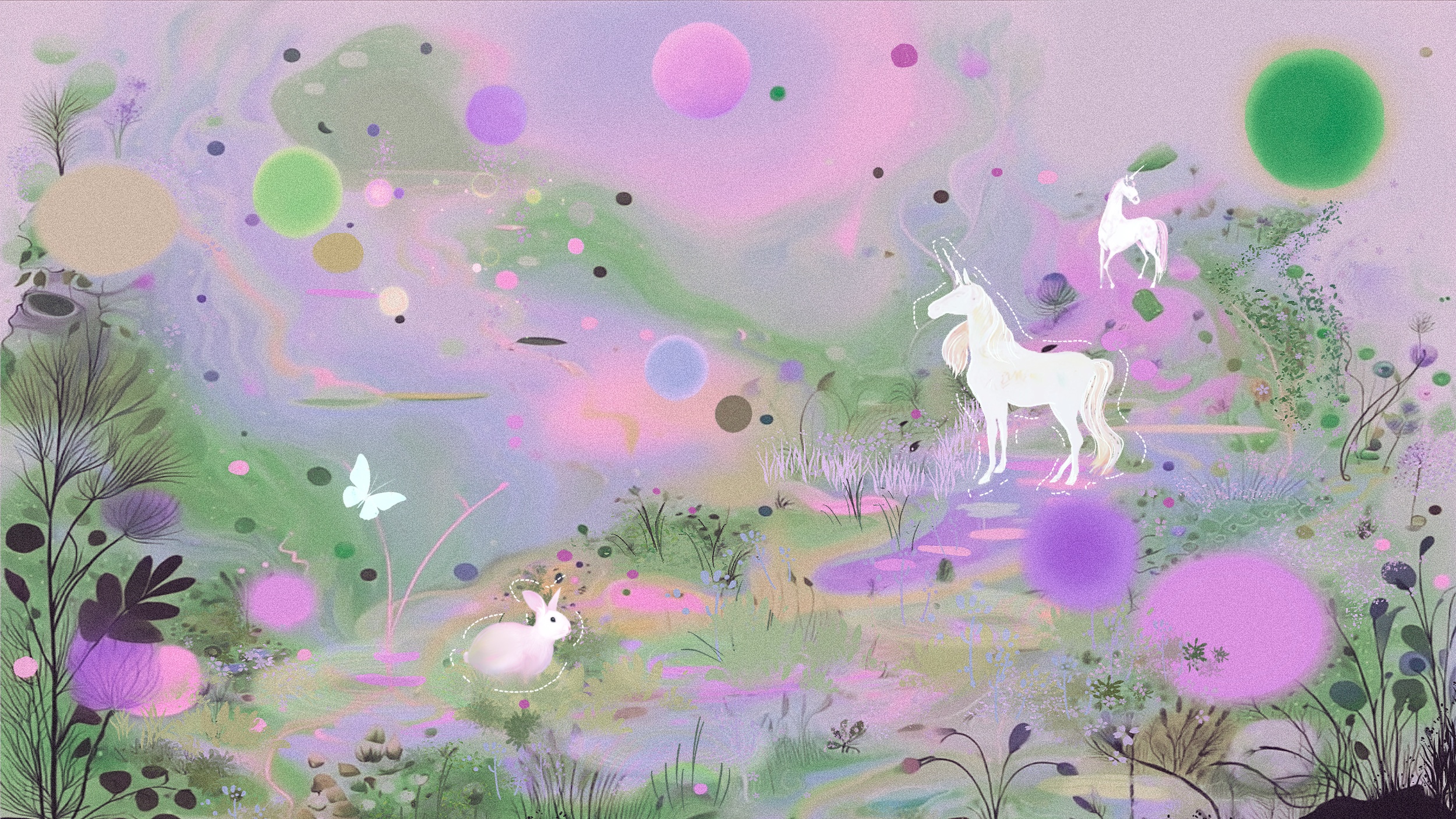
Among the eight films in the list of Short Film Competition 2, Murmur, though the briefest, left the strongest impression. Saturated in colours both dazzling and faintly uncanny, it traces the most fearful moments of a teenage girl: glimpsing her parents’ secrets at midnight, the embarrassment of her first menstruation, the unwanted, invasive touches. These fragments unfold one after another, as the girl drifts with the audience along the river of her subconscious, encountering her earliest experiences of shame, fear, curiosity, anxiety, excitement, and unease – the faintest, most intimate sensations. The turbulence ultimately settles into a gentle, verdant grassland. Passing through the mist of adolescence, she reconciles with her own body by exploring it. There is no clear narrative arc, yet there is emotional wholeness, strengthened by a carefully modulated score. The conspicuous red scarves worn by the characters introduce a broader institutional resonance into the otherwise intimate narrative, evoking the state educational and ideological framework that shapes the protagonist’s coming of age.
The hero in The Fissure of the Red Sight also looks back when wandering in the city, but toward larger forces – overlapping histories inhabiting the same physical space, and the omnipresent gaze suspended above every woman. Yet the overuse of long freeze frames compels the audience to fill in the narrative gaps using only their own imagination and experience. Each Solitary Moment and Rambling Accents unfold through urban wandering as well, though their stories are more concrete. Their characters hover between cultures, suspended in nocturnal New York streets or an oil-paint-like lawn in a sunny New York park. Language barriers, miscommunications, fractured pasts, and fading memories of girlhood thread through their journeys. Rather than simply looking back, they seem to ask ‘where to go next’. If the past refuses coherence, they nevertheless attempt to construct new narratives of ‘who I am’ in the present.
As for the question ‘where to go next’, 2024: A Swiss Odyssey offers one possible answer. Also structured around urban wandering, it initiates conversations by asking, ‘Do you believe in aliens?’ Humanity’s shared curiosity about the vast universe may one day dissolve borders and differences, for though we come from different places, we all look to the stars in search of where we might be heading.
In Back of the Portfolio, what drives the characters is more pressing. Here the key word is flee, rather than just wander – flee from the past, a certain culture, an identity, a commitment. Yet the ending of this flee cannot be as healing as Murmur, or as open as Each Solitary Moment and Rambling Accents. If two people bound by trauma cannot transcend inherited constraints, can they build a future? And if not, is the bond meaningless? These two women are constantly on the road, driving from one film set to another – a journey that evokes Thelma & Louise. But no matter how far they run, the looming shadow of patriarchy never recedes.
That same looming force also haunts male protagonists in Fatherland, Throughout These Cages, and A Soil A Culture A River A People. Unlike the women who wander or flee, these men remain trapped in the past – lingering within spaces that once offered protection or glory but at the cost of repression. But there exists a core of the self that cannot be fully extinguished. It continues to burn in the floating fire pit in Fatherland, and to dance with the flickering firelight reflecting on the mother’s face in Throughout These Cages.
These films are not flawless. Some performances feel tentative (for an example of strong performance, see Myopia); some attempt to compress grand ambitions into limited minutes; some reveal incoherent shot design or a political impulse that outpaces storytelling. Yet they remain the earliest, most intimate expressions of their makers – those who are wandering, lingering, searching or fleeing – like the first surge of lava from a volcano dormant for millions of years. The foam that rises is fragile and fleeting, but it signals the arrival of a new era.
Kairan Li
Insta: @kr_li0416
She / Her
After graduating in Applied Theatre from Royal Central School of Speech and Drama, Kairan Li has worked primarily as a drama teacher in Beijing over the past five years.
Alongside her work in theatre education, she has worked across film criticism and festival contexts, including both operations and editorial coverage, since 2017. Her undergraduate training in Classical Chinese Studies at Wuhan University has also shaped how she engages with and interprets East Asian cinema.