

A Film Review of “Chinatown Cha-Cha (2024)
Joanie Chung
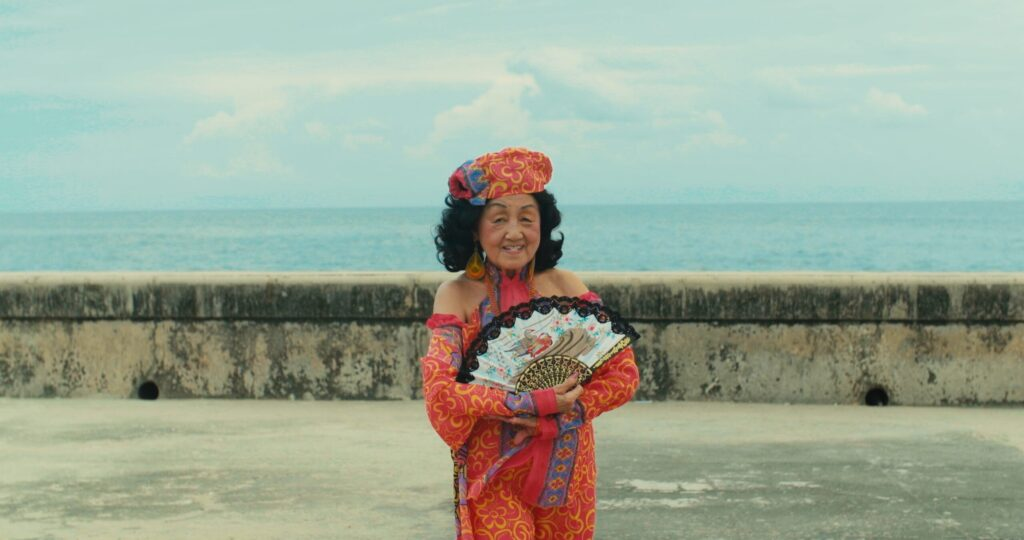
For immigrants, being in show business “was not okay, not normal,” says The Shanghai Pearl, a burlesque dancer featured in the documentary. Ipso facto, I’m guessing most immigrant parents don’t want their immigrant daughters working as exotic dancers. However, there’s also a certain phrase about how well-behaved women seldom make history. It’s a good thing that this does not apply to Coby Yee.
Directed by Luka Yuanyuan Yan, “Chinatown Cha-Cha” follows the last year of Coby Yee, a star burlesque dancer in the 1960s and former San Francisco club owner of The Forbidden City nightclub. Immortalised on my screen, the documentary chronicles her return to the stage at the tender age of ninety-two. This time, she’s alongside her artist beau, Stephan King (no relation to the writer), and her senior citizen dance troupe called Grant Avenue Follies. Together, they tour around the US, China, and Cuba, meeting with fellow dancers, members of the Asian diaspora, and families.
Visually, this documentary is a delight. Under the cinematography of Carlo Nasisse, the scenes are beautifully shot, capturing every glistening sequin on Coby’s costumes and each dancer’s fluttering golden fans. When it comes to composition, I am fond of how the film has chosen to pair the domestic plateau of electrical appliances and various trinkets against the ongoings of Coby’s life as a retiree. For stories about the past, Yan incorporates whimsical little animations of Coby and her sister as Coby tells the story of how two girls born to Cantonese immigrants found their love of dancing, as well as aged photos and grainy archive videos of Coby and The Forbidden City in its heyday. Through this, Yan undoubtedly lets Coby shine with her excellent storytelling skills.
The subjects of this documentary, Coby, Stephan, and the other senior showgirls, are extremely charming. When the filmmakers interview them, Yan has the subjects lead the documentary. Most interviews and scenes are filmed as the subjects work or travel, allowing audiences to peer into their lives. Coby and the showgirls giggle about their diva days on the dance floor and meeting famous guests. Through Stephan, the film explores finding love later in life, and audiences are sure to enjoy the couple’s bickering and banter. Furthermore, this intimate method of filming allows Yan to explore ageing. Although Coby has a morbid sense of humour, often calling each of her performances her “swan song”, Yan’s documentary shows that life can be exciting in your senior years, especially when you have a community. While mainstream media tends to equate ageing women as irrelevant, Coby and the Grant Avenue Follies challenge that sentiment with elegance. Wrinkles and white hair be damned, the senior showgirls still stir up the crowd with their cheeky choreography and sparkly costumes that rival today’s biggest pop stars.
On the debit column, online critics note that the film dances around Orientalism. While I agree, I sense this was a topic Coby does not seem comfortable discussing. There’s a scene in the documentary where she talks about her early career, finding out about burlesque and how strip-teasing paid better, she off-handedly mentions, that they’re things she’d “like to forget”. Instead of exploiting the sensitive topic, Yan’s documentary provides a “kind” perspective into the dancer’s life and chooses to focus on Coby as a retiree. This is not to say there is no mention of Orientalism. The documentary mentions the criticism of nightclubs for promoting the fetishisation of Asian culture and women. It is no secret that The Forbidden City nightclub, despite being a club for Asian Americans, performed to a mostly white audience. The film also mentions the marginalization and the lack of opportunities for Asian Americans in the 1900s, such as the 1882 Chinese Exclusion Act and the incarceration of American Japanese citizens during the Second World War. Nonetheless, it is a pity that Yan does not explore this subject further.
For the sake of context, it was a missed opportunity for the documentary to discuss how clubs like The Forbidden City were only able to profit through white “tourist” audiences. After all, these audiences were only willing to pay for “exotic” performances that fit with what they perceived and stereotyped as “oriental”. As theatre scholar Sansan Kwan explains, Asian American performers were only accepted by White American audiences because of their “differences”, who demanded these “differences” to be “put on display”. To make a living, Asian American performers in the sixties had to walk this delicate line of challenging and solidifying racial stereotypes. If only this connection was clearer, this documentary could have provided a much more nuanced perspective. Despite this complex and uncomfortable reality, Yan’s choice to focus on Coby’s later life shows the fruits of her labour— the legacy and community left behind. Through dancing and the club, Coby has built a community and space for Asian Americans, a costume business for fellow showgirls and dancers, and even sent profits to her family in China. Without pioneers like Coby Yee, where would Asian Americans be today?
At its core, Chinatown Cha-Cha is a film about an artist’s survival. Alongside Yan’s deft cinematography, charming subjects, and glamorous costumes, Yan shines a delicate light on the first-generation Asian-Americans, the elderly who faced so much discrimination in their time, yet sacrificed much for their future generations. Coby Yee and her friends show that even as we get closer and closer to our life’s denouement, you should keep the audience on their toes. Put on the crowns, fans, and heels because the show must go on! Keep dancing and put on a “swan song” that they’ll still talk about years down the line.
References:
1. https://daily.jstor.org/americanism-exoticism-and-the-chop-suey-circuit/
Joanie Chung
Insta: @joaniechung.mp4
She/she
When she isn't at her regular nine-to-five, you can find Joanie Chung at the cinema, drafting up a film review for social media and trying to make other cinephiles laugh on Letterboxd.
Growing up in Hong Kong, her parents raised her on a steady diet of Stephen Chow comedies and triad crime thrillers. Instead of studying, she spent high school mastering Photoshop, making anime edits and fanart for Tumblr. When her teachers urged her to channel her creativity into something useful, she joined the yearbook team—eventually becoming editor-in-chief.
Now, Joanie runs a film and culture blog across Instagram, TikTok, Substack, and YouTube, sharing her passion for cinema. She’s always excited to connect with fellow creatives and cinephiles, especially those who love Tony Leung and Wong Kar-wai.